The Real Environmental Cost of Data Centers
4 min read
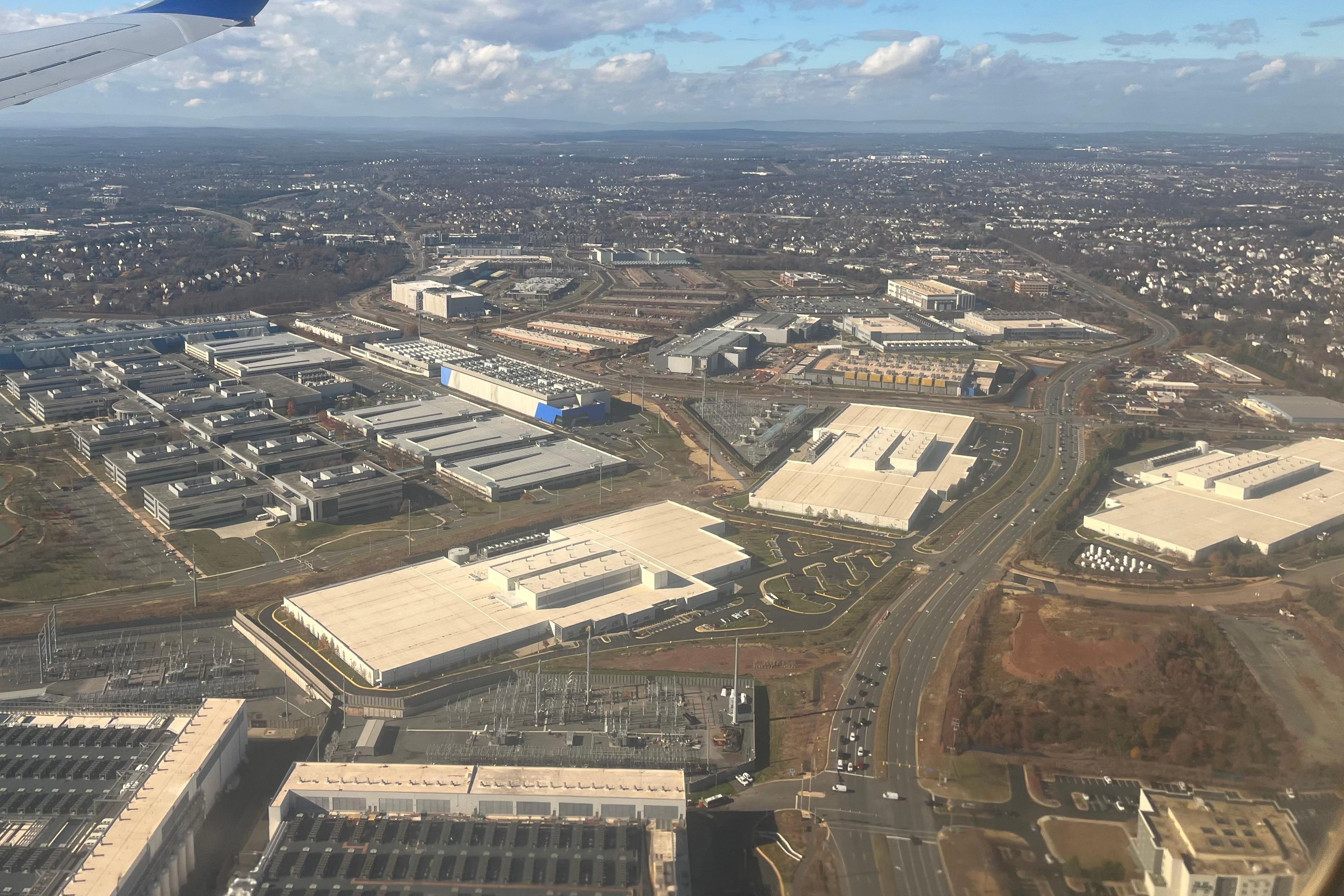
Talk about data centers long enough, and you hear the same two exaggerated stories. One side treats every chatbot prompt like a minor climate crime. The other pretends these server warehouses barely register on the grid and use less water than golf courses. Both are wrong, in opposite directions.
The Global Numbers
I went into this expecting the water numbers to be the main scandal, mostly because of viral posts claiming AI is draining drinking supplies. On a planetary scale, though, the global numbers are actually smaller than I expected. Data centers used roughly 1.5% of the world's electricity in 2025 and generated less than 1% of global carbon dioxide emissions. Even if AI growth doubles their electricity demand by 2030, their operational footprint stays well behind sectors like agriculture, which drives roughly a fifth of global greenhouse gas emissions, or steel, cement, and transport.
Individual text prompts are also far smaller than the memes claim. Live production measurements from Google's servers show a median Gemini text query uses about as much electricity as watching nine seconds of television and evaporates roughly five drops of water. That's nothing at scale, especially when you factor in heavy reasoning models or AI video generation, which burn orders of magnitude more energy than basic text. Still, for an individual person, taking a single flight or eating beef regularly moves the carbon needle far more than typing questions into a chatbot.
The golf-course comparison is where industry talking points fall apart, mainly because they leave out the power plants. U.S. golf courses apply roughly 531 billion gallons of irrigation water a year, compared to the 17.4 billion gallons data centers consume directly on-site. Generating the electricity to run those servers evaporates another 211 billion gallons off-site at power plants, bringing total U.S. data center water consumption to 228 billion gallons. Golf still uses more water nationally, just nowhere near the lopsided margin defenders claim.
Why Concentration Changes Everything
What actually bothered me once I dug into the data wasn't the global average. It's what happens when dozens of massive facilities pile into the exact same counties and run around the clock. In Virginia, data centers already consume more than a quarter of the state's electricity. A server campus takes about one to two years to build, while high-voltage transmission lines take four to eight years. That lag has consequences: a spatial study of more than 14,000 coal-generating units by researchers at the Hong Kong University of Science and Technology found that units within 25 kilometers of data centers built between 2020 and 2024 were associated with a 14% lower retirement risk. Developers have also planned nearly 100 gigawatts of new gas power for data centers as of the end of 2025.
In Northern Virginia's Prince William and Loudoun counties, residents living near dense server campuses have fought for years over a constant low-frequency hum from rooftop chillers and exhaust fans, a sound that standard A-weighted municipal noise ordinances can undercount. During Winter Storm Fern in January 2026, federal officials authorized Mid-Atlantic grid operators to tap data center backup diesel generators as a last resort to prevent blackouts. Later that year, during an October warm spell, another federal emergency order authorized PJM to call on data center backup generators. In the same piece, energy analysts noted that Northern Virginia utility executives had said they came within minutes of needing those fleets. Meanwhile, roughly two-thirds of new U.S. data centers built since 2022 sit in high water-stress areas, where large evaporative cooling towers can draw up to 5 million gallons of water a day.
The Hidden Grid and Supply-Chain Costs
Even the financial and climate accounting gets messy past the headlines. In the 13-state PJM electricity market, the independent market monitor attributed $29.4 billion across four capacity auctions to existing and projected data center demand, raising real questions about who pays the bill if speculative AI projects are canceled. On top of that, many corporate "100% renewable" claims are based on annual accounting totals rather than hour-by-hour clean power matching, leaving out the embodied carbon of concrete, steel, Taiwanese chip fabs still running mostly on fossil electricity, and AI hardware projected to generate up to 5 million metric tons of electronic waste by 2030.
How Communities Can Set Better Rules
None of this means communities have to simply accept the consequences. Moving to closed-loop liquid cooling systems that evaporate zero water for cooling, as Microsoft began rolling out across its new designs, stops facilities from draining local drinking supplies. Enforcing low-frequency nighttime noise limits and cleaner Tier 4 backup generators, which Virginia lawmakers recently passed legislation requiring for new data centers, protects nearby homes. And adopting ring-fenced utility tariffs, like Ohio's rule requiring new large data centers to pay for at least 85% of their contracted power for up to 12 years, keeps grid-upgrade risks off household electric bills.
In practice, data centers are heavy industrial facilities, and their environmental costs don't disappear just because the software they run feels invisible. When towns build them with strict rules on water, noise, backup power, and utility rates, they're manageable neighbors. Otherwise, nearby residents end up dealing with the consequences.
Sources24
Bray, D., & Dominici, F. (2026). Noise emissions from hyperscale AI data centers: A poorly characterized exposure at the doorstep of community health research. arXiv. https://arxiv.org/pdf/2610.03975
Chacko, S. (2026, August 31). US gas power proposals linked to data centres nearly doubled in the first half of 2026. Down To Earth. https://www.downtoearth.org.in/energy/us-gas-power-proposals-linked-to-data-centres-nearly-doubled-in-the-first-half-of-2026
Dallard, J. (2025, November 16). Overcoming energy constraints is key to delivering on Europe's data centre goals. International Energy Agency. https://www.iea.org/commentaries/overcoming-energy-constraints-is-key-to-delivering-on-europe-s-data-centre-goals
Elsworth, C., Huang, K., Patterson, D., Schneider, I., Sedivy, R., Goodman, S., Townsend, B., Ranganathan, P., Dean, J., Vahdat, A., Gomes, B., & Manyika, J. (2025). Measuring the environmental impact of delivering AI at Google scale. arXiv. https://arxiv.org/html/2508.15734v1
Golf Course Superintendents Association of America. (2025). Golf course environmental profile: Phase IV, Volume I: 2025 water use and conservation on U.S. golf courses. https://www.gcsaa.org/GCEP
Heckt, S. (2026, August 27). New proposal from grid operator PJM would require data centers to bring their own power. Virginia Mercury. https://virginiamercury.com/2026/08/27/new-proposal-from-grid-operator-pjm-would-require-data-centers-to-bring-their-own-power/
International Energy Agency. (2025). Energy and AI. https://www.iea.org/reports/energy-and-ai
Jegham, N., Abdelatti, M., Koh, C. Y., Elmoubarki, L., & Hendawi, A. (2025). How hungry is AI? Benchmarking energy, water, and carbon footprint of LLM inference. arXiv. https://arxiv.org/abs/2505.09598
Korea Wind Intel. (2026, November 12). Study links AI data center growth to delayed coal plant retirements. https://www.koreawindintel.com/study-links-ai-data-center-growth-to-delayed-coal-plant-retirements/
Monitoring Analytics. (2026). 2026 quarterly state of the market report for PJM: January through June. https://www.monitoringanalytics.com/reports/PJM_State_of_the_Market/2026.shtml
Nicoletti, L., Ma, M., & Bass, D. (2025, May 8). AI is draining water from areas that need it most. Bloomberg. https://www.bloomberg.com/graphics/2025-ai-impacts-data-centers-water-data/
O'Donnell, J., & Crownhart, C. (2025, May 20). We did the math on AI's energy footprint. MIT Technology Review. https://www.technologyreview.com/2025/05/20/1116327/ai-energy-usage-climate-footprint-big-tech/
Paullin, C. (2026, January 29). Data centers in PJM grid can rely solely on generators during the cold, DOE rules. Inside Climate News. https://insideclimatenews.org/news/29012026/data-centers-in-pjm-grid-can-rely-solely-on-generators-during-the-cold-doe-rules/
Public Utilities Commission of Ohio. (2025). Opinion and order: AEP Ohio data center tariff (Case No. 24-0508-EL-ATA). https://dis.puc.state.oh.us/CaseRecord.aspx?CaseNo=24-0508
Ritchie, H. (2020a). Sector by sector: Where do global greenhouse gas emissions come from? Our World in Data. https://ourworldindata.org/ghg-emissions-by-sector
Ritchie, H. (2020b, January 24). You want to reduce the carbon footprint of your food? Focus on what you eat, not whether your food is local. Our World in Data. https://ourworldindata.org/food-choice-vs-eating-local
Ritchie, H. (2023). Which form of transport has the smallest carbon footprint? Our World in Data. https://ourworldindata.org/travel-carbon-footprint
Ritchie, H. (2026). How much energy do data centers and artificial intelligence use? Our World in Data. https://ourworldindata.org/how-much-energy-do-data-centers-and-artificial-intelligence-use
Shehabi, A., Smith, S. J., Hubbard, A., Newkirk, A., Lei, N., Siddik, M. A. B., Holecek, B., Koomey, J., Masanet, E., & Sartor, D. (2024). 2024 United States data center energy usage report (LBNL-2001637). Lawrence Berkeley National Laboratory. https://doi.org/10.71468/P1WC7Q
Solomon, S. (2024, December 9). Sustainable by design: Next-generation datacenters consume zero water for cooling. Microsoft Cloud Blog. https://www.microsoft.com/en-us/microsoft-cloud/blog/2024/12/09/sustainable-by-design-next-generation-datacenters-consume-zero-water-for-cooling/
Taiwan Semiconductor Manufacturing Company. (2026). TSMC 2025 sustainability report. https://esg.tsmc.com/file/public/2025-TSMC-Sustainability-Report-e.pdf
Wang, P., Zhang, L.-Y., Tzachor, A., & Chen, W.-Q. (2024). E-waste challenges of generative artificial intelligence. Nature Computational Science, 4(11), 818–823. https://www.nature.com/articles/s43588-024-00712-6
Wellinghoff, J., Baclig, A., & Kaun, B. (2026, November 10). The AI boom could shift diesel generators from backup to everyday use. Utility Dive. https://www.utilitydive.com/news/ai-boom-could-shift-diesel-generators-backup-everyday-use/873954/
Yañez-Barnuevo, M. (2025, June 25). Data centers and water consumption. Environmental and Energy Study Institute. https://www.eesi.org/articles/view/data-centers-and-water-consumption
Get new posts by email
One email when something new is published. Unsubscribe any time.
Or follow by RSS